
School feeding programmes play a critical role in supporting education outcomes, improving nutrition, and increasing school attendance across Kenya.In many regions, particularly arid and semi-arid counties, school meals are a lifeline for learners and a key pillar of social protection.
However, while significant progress has been made in expanding access to school meals, less attention has traditionally been given to the systems used to prepare them. The technologies used in school kitchens have a direct impact on operational efficiency, costs, health outcomes, and environmental sustainability.
At Cusum Energy, we are currently undertaking a comprehensive assessment of cooking technologies in schools across Isiolo, Garissa, Turkana, and Makueni counties. This initiative aims to generate evidence that will inform the scale-up of clean cooking solutions in educational institutions.
A Comprehensive Field-Based Assessment
The assessment involves detailed field evaluations of cooking systems currently in use within schools. These include:
- Improved Cookstoves (ICS)
- Liquefied Petroleum Gas (LPG) burners
- Masonry stoves
- Traditional three-stone stoves
- Steam cooking systems increasingly being adopted in select institutions
Each of these technologies plays a different role in school cooking environments, shaped by factors such as cost, fuel availability, cultural preferences, and infrastructure readiness.
Rather than focusing solely on performance efficiency, the assessment takes a holistic approach to understanding real-world suitability in school settings.
Multi-Dimensional Evaluation Framework
To ensure a robust and practical analysis, the assessment examines multiple dimensions of cooking technology performance, including:
1. Technological Performance
Evaluating efficiency, durability, safety, and cooking capacity in institutional settings.
2. Financial Implications
Assessing installation costs, fuel expenditures, maintenance requirements, and long-term affordability for schools.
3. Fuel Availability and Energy Access
Understanding the reliability, accessibility, and supply chains of fuels such as firewood, charcoal, LPG, and alternative energy sources.
4. Environmental and Climate Impact
Examining emissions, deforestation pressure, and broader environmental sustainability considerations.
5. Cultural and Social Context
Recognizing that cooking practices are deeply embedded in local traditions and community preferences surrounding schools.
Inclusion of Diverse School Contexts
The assessment also extends to schools in refugee settings, where cooking systems face additional challenges such as constrained resources, high demand variability, and limited fuel access. These environments provide important insights into resilience and adaptability of different technologies under pressure.
Stakeholder Engagement and Field Insights
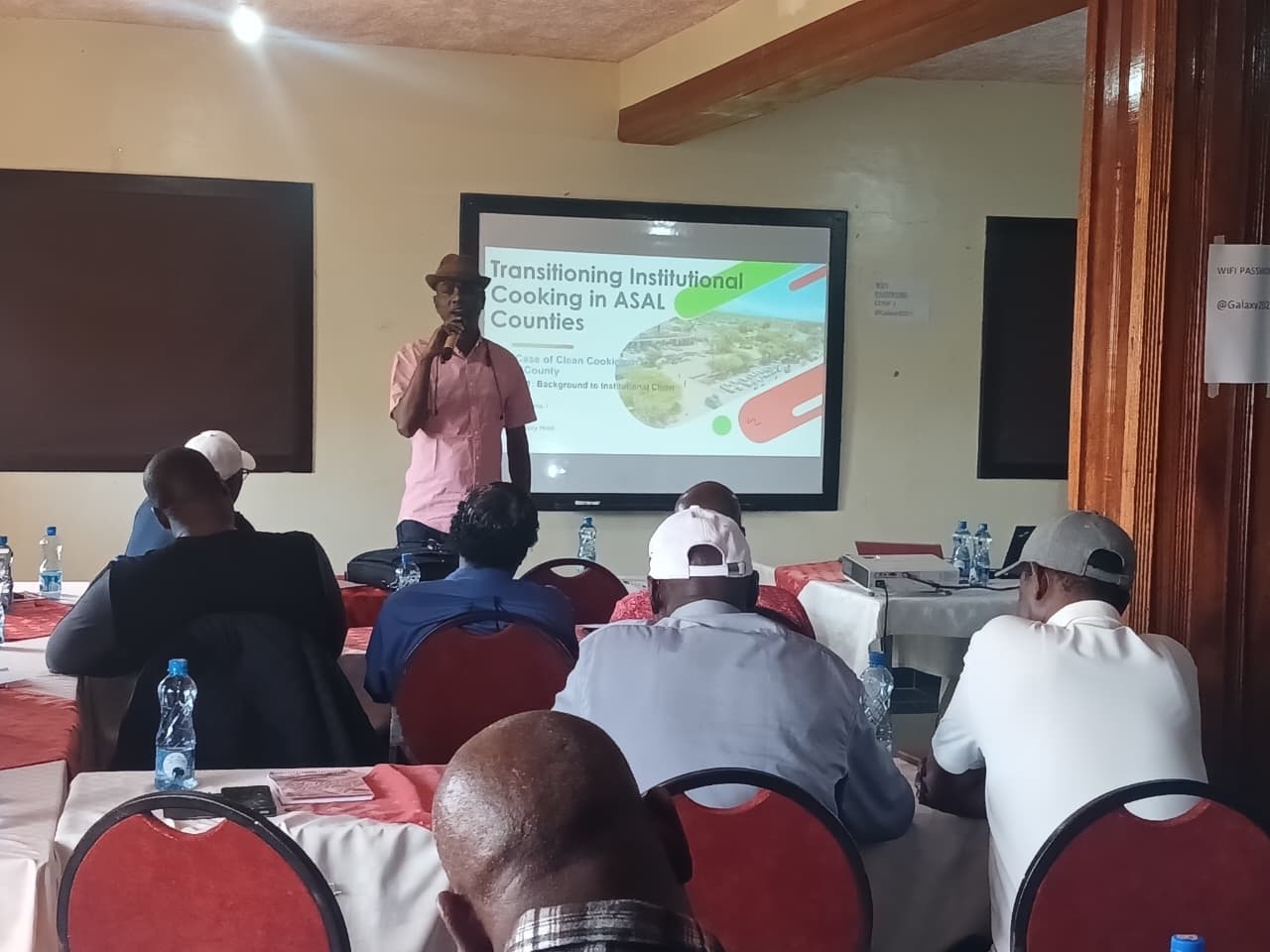
A key component of the process has been direct engagement with stakeholders, including school administrators and education directors. The assessment concluded with Focus Group Discussions that provided valuable insights into operational realities, decision-making constraints, and lived experiences of managing school feeding programmes.
These engagements ensure that the findings are grounded in practical realities rather than theoretical assumptions.
Towards Scalable Clean Cooking Solutions
The findings from this assessment will support evidence-based decision-making on the adoption and scale-up of clean cooking technologies in schools. The goal is to identify solutions that are not only technically viable but also economically feasible, socially acceptable, and environmentally sustainable.
As Kenya continues to strengthen its school feeding programmes,integrating clean cooking solutions into institutional kitchens presents a significant opportunity to improve efficiency while reducing environmental impact.
Improving school feeding outcomes requires a systems-based approach that goes beyond food provision. The technologies used to prepare school meals are a critical but often overlooked component of the education and energy nexus.
Through this ongoing assessment, Cusum Energy is contributing to a clearer understanding of how clean cooking technologies can be effectively integrated into school systems to support healthier, more efficient, and more sustainable learning environments.